America’s innovation leadership has always depended on people willing to take risks—from garage inventors and entrepreneurs to startups, small businesses, and university researchers. But great ideas alone are not enough. Innovators need an intellectual property system that protects the results of their work.
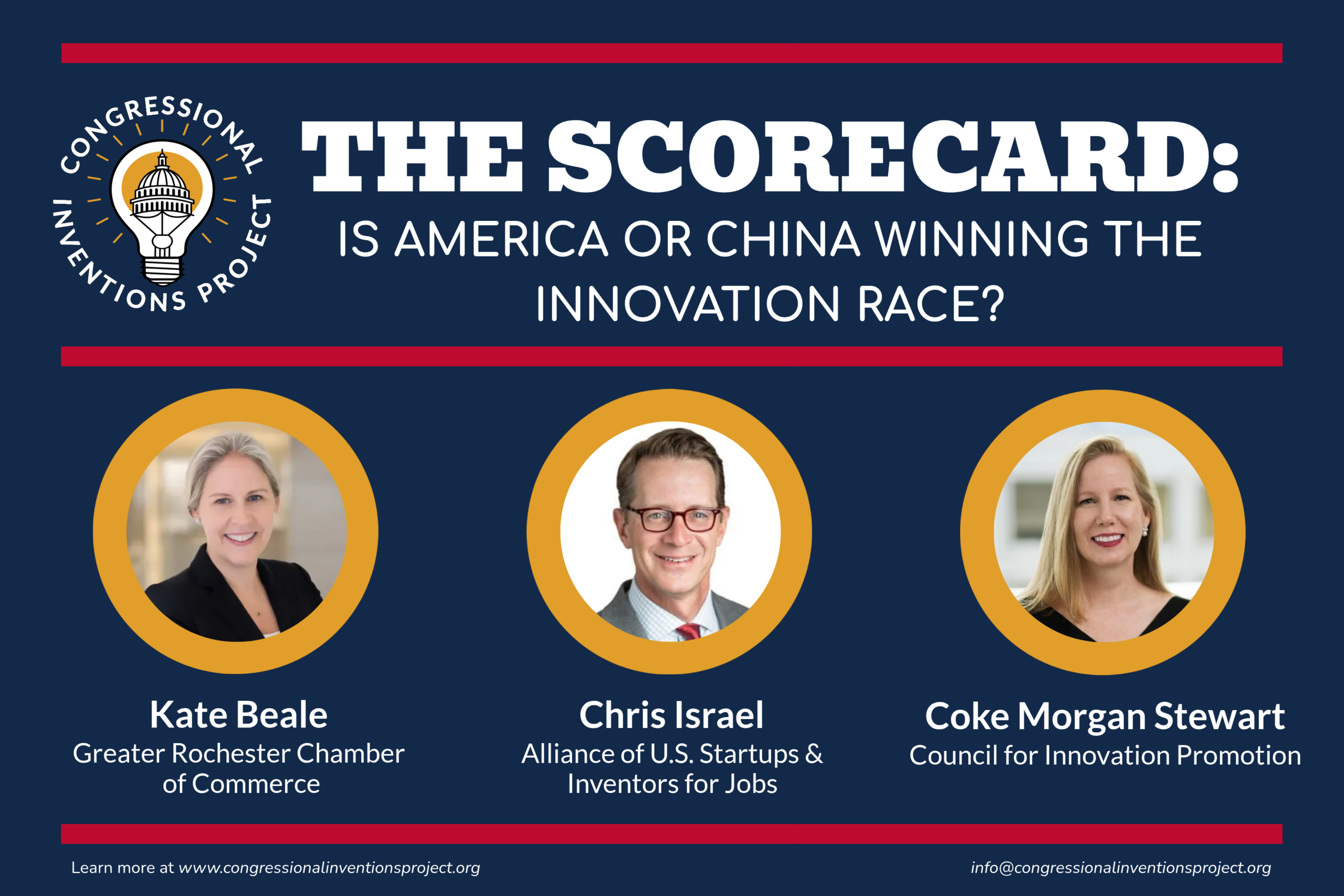
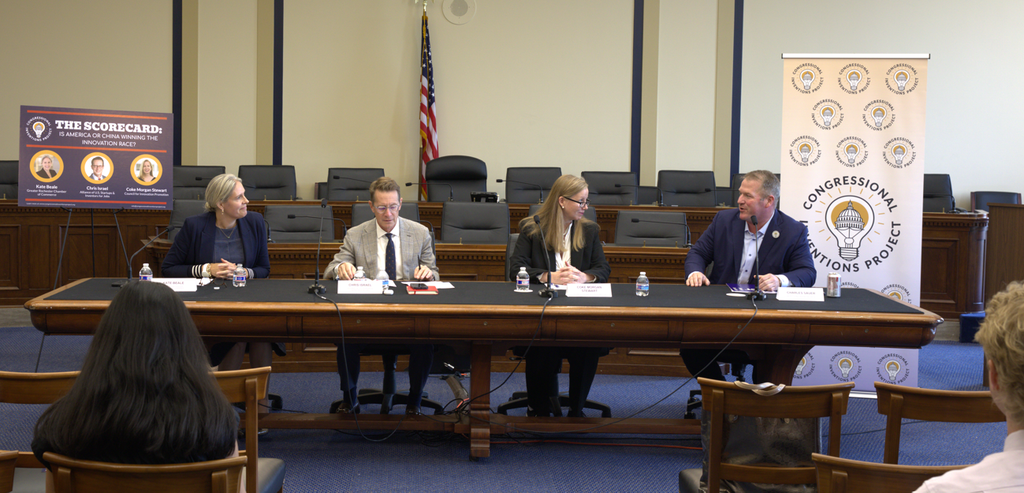
That was the focus of the Congressional Inventions Project’s September 17 Capitol Hill event, “The Scorecard: Is America or China Winning the Innovation Race?” The discussion brought together representatives of startups, small businesses, individual inventors, and innovators to examine how America’s patent system affects innovation and competitiveness.
More than 70 people attended, representing 30 congressional offices and 11 outside organizations.
The message was straightforward: if America wants to remain the world’s innovation leader, we need stronger and more reliable patent rights.
Strong Patents, Stronger Remedies
For startups and small businesses, a patent can be among their most valuable assets. It can attract investment, support commercialization, and allow an emerging company to compete with much larger businesses.
But a patent is only valuable if it can be defended.
As the discussion highlighted, China has strengthened its intellectual property remedies, while American innovators continue to face significant challenges when enforcing their rights. The United States should ensure that American patent owners have meaningful tools to protect their inventions.
That includes making injunctions easier to obtain when infringement has been established and the circumstances warrant stopping the infringing activity.
Don’t Weaken the Inventor
The Patent Trial and Appeal Board has also changed the patent landscape. For individual inventors and startups, repeated challenges to patents can create substantial costs and uncertainty.
The system should strike the right balance between challenging invalid patents and providing certainty to patent owners. A patent should give an inventor confidence to build—not simply create another obstacle to commercialization.
Protect Bayh-Dole
The discussion also underscored the importance of protecting the Bayh-Dole framework, which helps move federally supported research from laboratories into the marketplace.
Kate Beale emphasized the importance of defending, promoting, and protecting Bayh-Dole. Ensuring that America’s research can become new technologies, companies, and jobs is essential to maintaining our innovation edge.
IP Is a Small Business Issue
Charles Sauer brought attention to the perspective of garage inventors, while Chris Israel discussed the needs of startup inventors and innovators.
And Coke Morgan Stewart captured a central theme of the event when she said:
“IP is a small business issue.”
It is.
America’s innovation ecosystem is powered not only by large corporations, but by entrepreneurs, inventors, startups, researchers, and small businesses. They need an IP system that rewards risk-taking and protects the results.
The September 17 event advanced that conversation directly with congressional offices and stakeholders, creating opportunities for continued engagement on strengthening America’s intellectual property framework.
America has the innovators. Now we need the policies that allow them to compete.
Strong patents. Strong remedies. Strong innovation.