How IP Rights Promote Innovation
Intellectual Property (IP) rights are foundational to U.S. innovation, economic competitiveness, and national security. By transforming ideas into valuable economic assets, IP protections incentivize creativity, secure investments, and enable market transactions, with U.S. patents valued at nearly $3 trillion in 2021. These rights are particularly critical for R&D-focused firms in advanced technology sectors like 5G and AI, which rely on secure IP to license innovations and sustain their contributions to complex value chains, ensuring the U.S. maintains its technological edge.
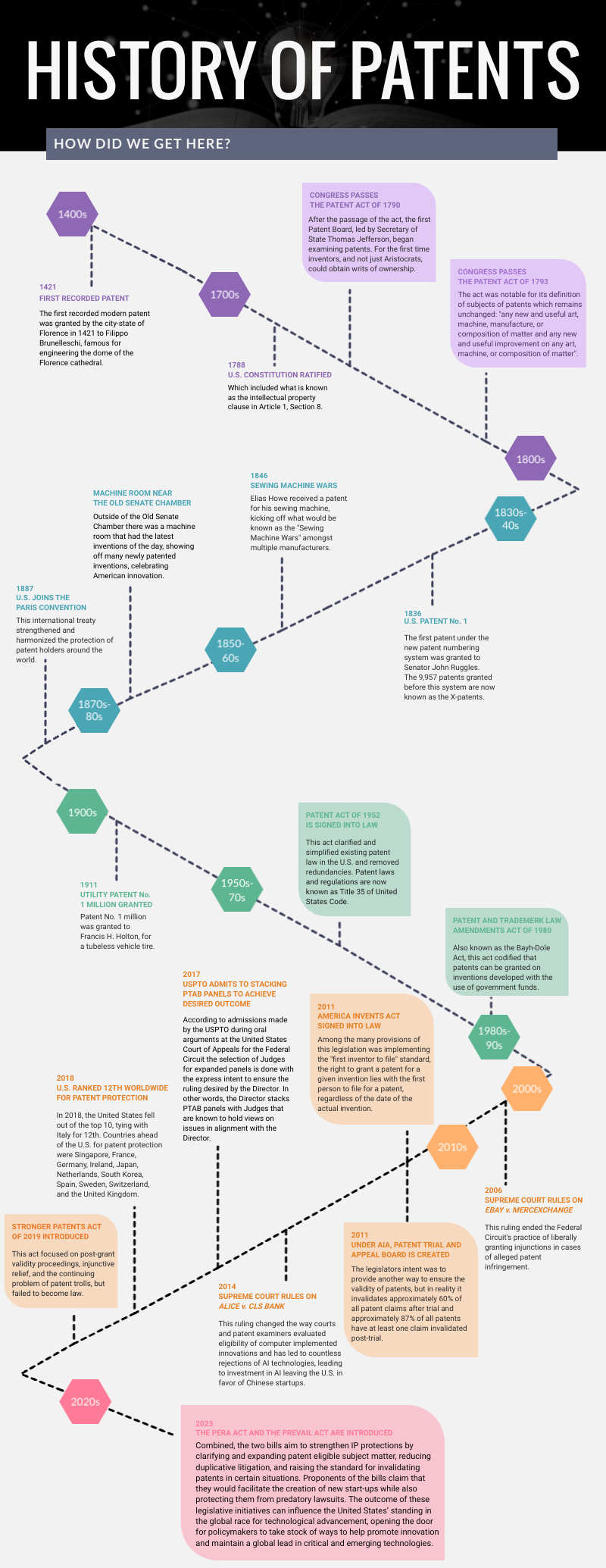
IP rights also empower small businesses and startups, which drive over 40% of U.S. economic activity and two-thirds of new jobs. Strong IP protections allow these smaller actors to attract investment and form partnerships without fear of idea theft by larger firms. Historical weakening of IP rights, such as during the mid-20th century, stifled innovation and favored large corporations, while reforms like the Bayh-Dole Act in the 1980s revitalized the innovation ecosystem by enabling startups to thrive, highlighting the critical role of robust IP rights in fostering a dynamic and competitive economy.

Congressional Inventions Project Annual Report
The Congressional Inventions Project (CIP) marked a milestone year in 2025, significantly strengthening the connection between Congress and America’s innovation community. Through bipartisan engagement, high-impact events, and accessible educational resources, CIP helped elevate the voices of inventors and underscore the critical role strong patent protections play in U.S. economic growth and global competitiveness.


Year in Review
In 2025, the Congressional Inventions Project (CIP) strengthened America’s innovation culture by deepening policymakers’ understanding of the critical role inventors and strong patent protections play in economic growth and global competitiveness. Working alongside the bipartisan, bicameral Congressional Inventions Caucus (CIC), CIP connected lawmakers with innovators, clarified complex intellectual-property issues, and elevated invention as a national policy priority.

“[The Patent System] added the fuel of interest to the fire of genius in the discovery and production of new and useful things.”
Abraham Lincoln
Patent Policy Primer
The Patent Policy Primer is a concise guide to how the U.S. patent system works—and why it matters. From the Constitution’s promise of securing exclusive rights for inventors to today’s high-stakes debates over patent eligibility, enforcement, and global competition, this resource offers a clear, accessible overview of key issues in American patent law.
The Primer explains how patents fuel innovation, support investment, and level the playing field for small inventors. It also highlights growing threats to the system—from weakened enforcement tools to foreign trade barriers—and points policymakers toward reforms that can restore America’s leadership in innovation.